

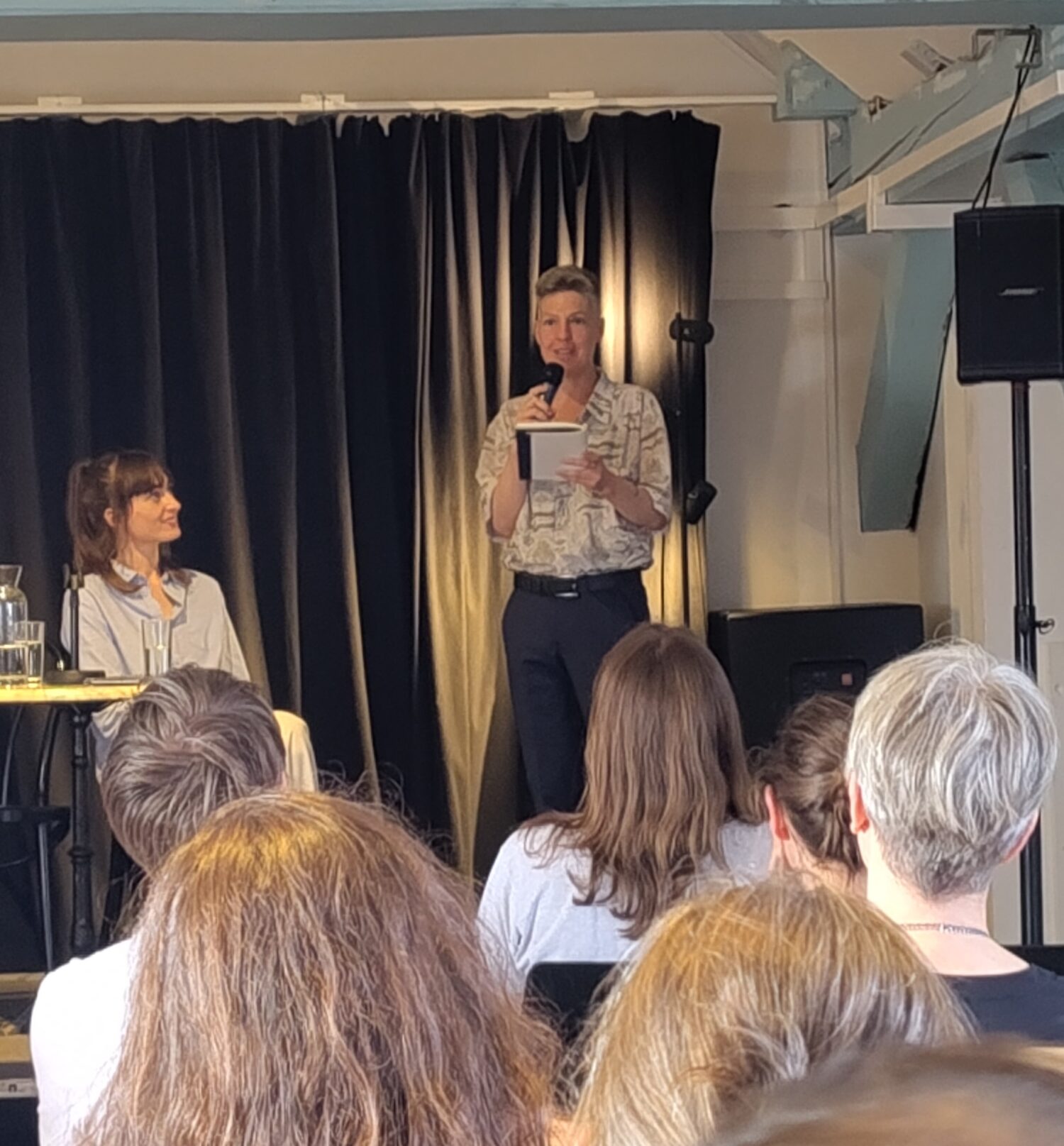
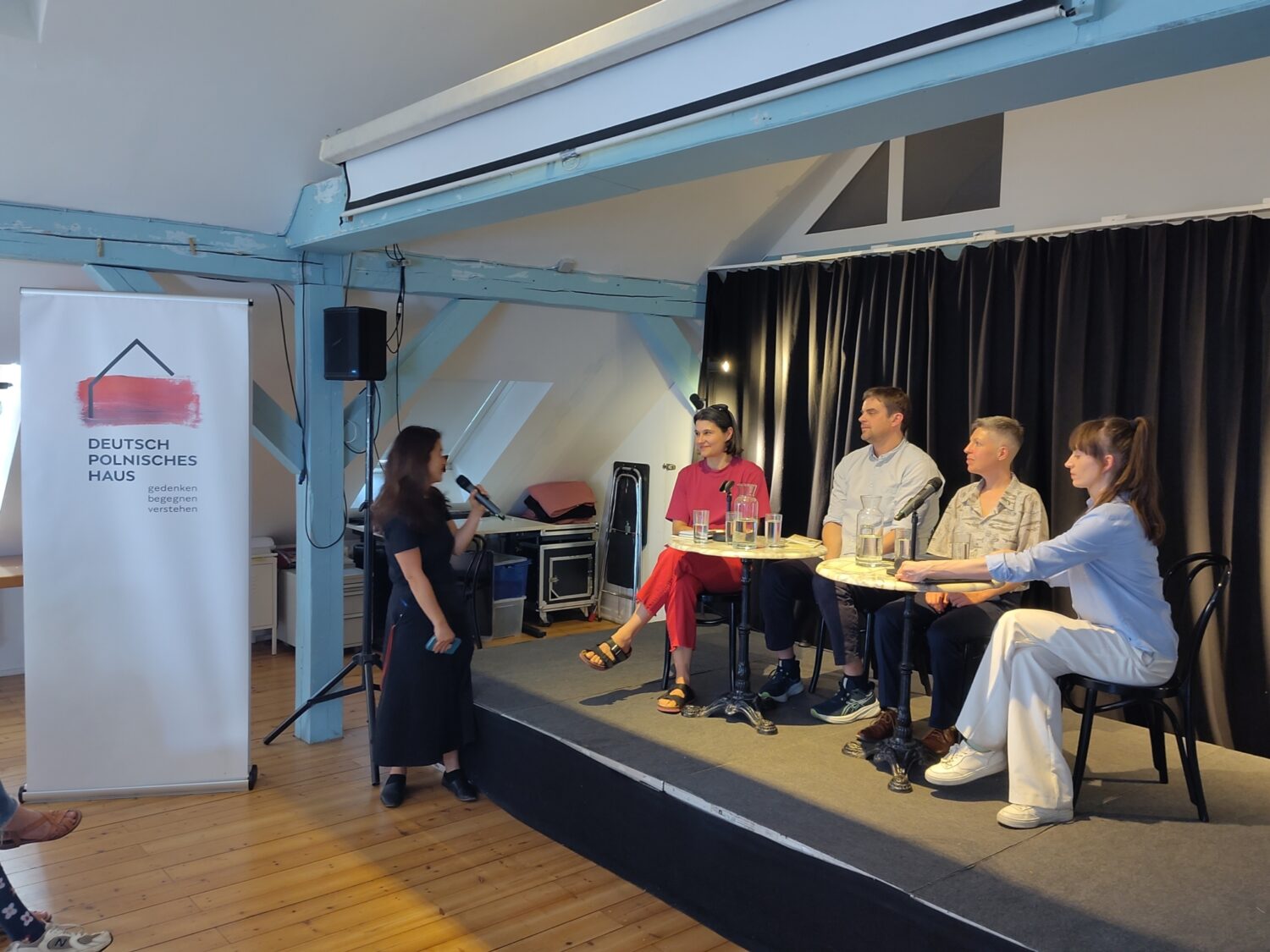
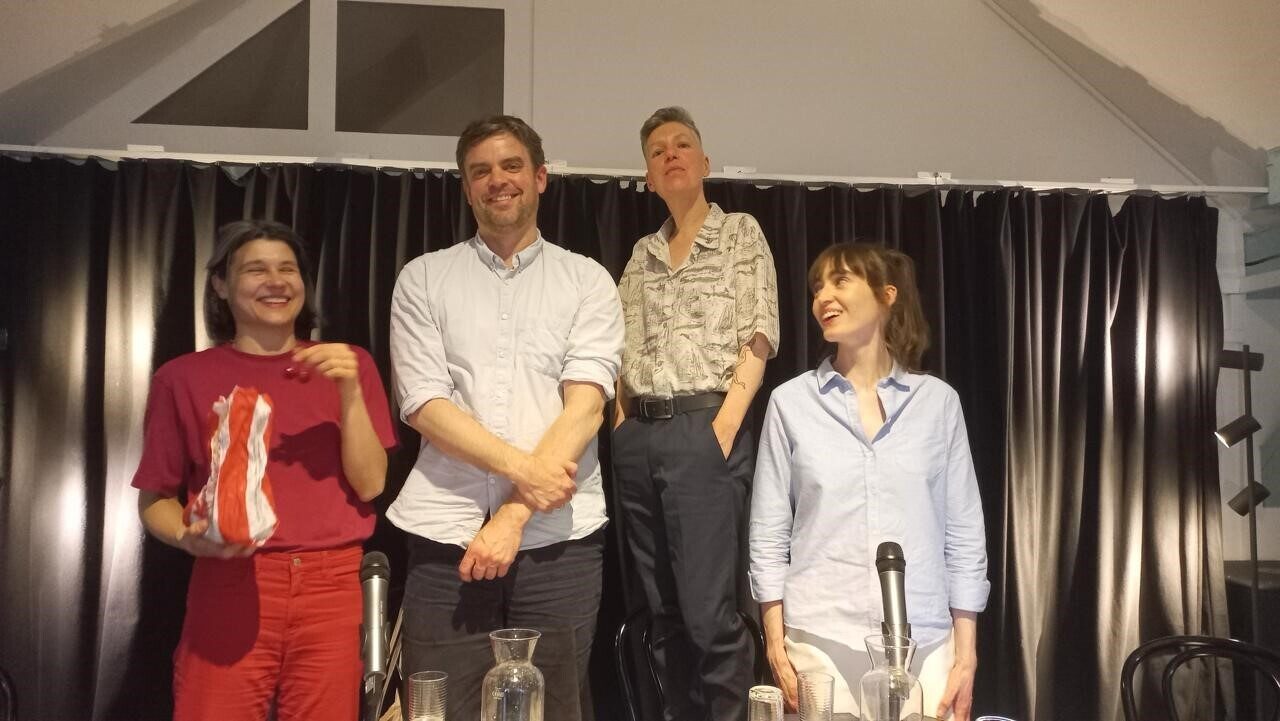
© FHXB Friedrichshain-Kreuzberg Museum
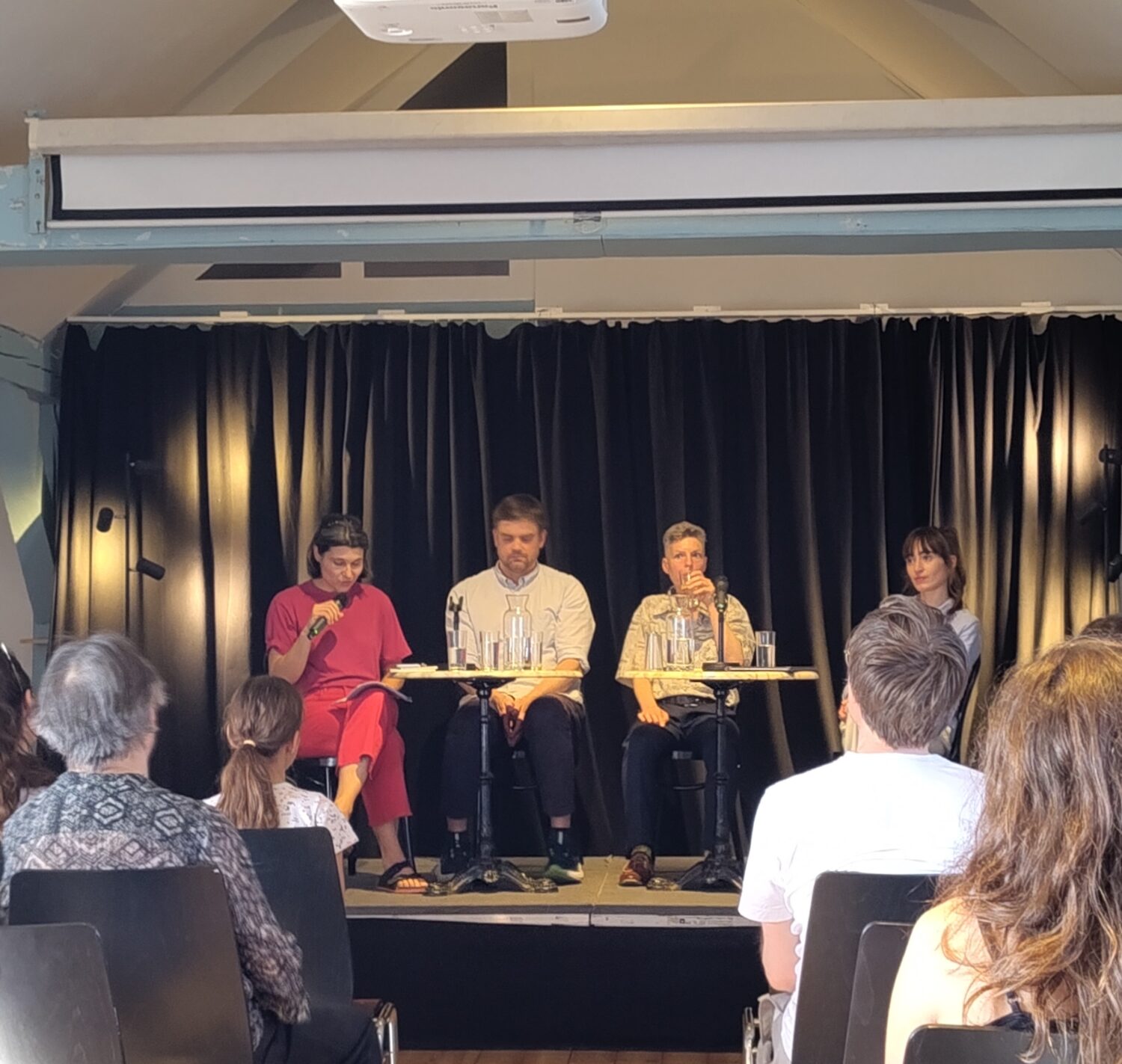
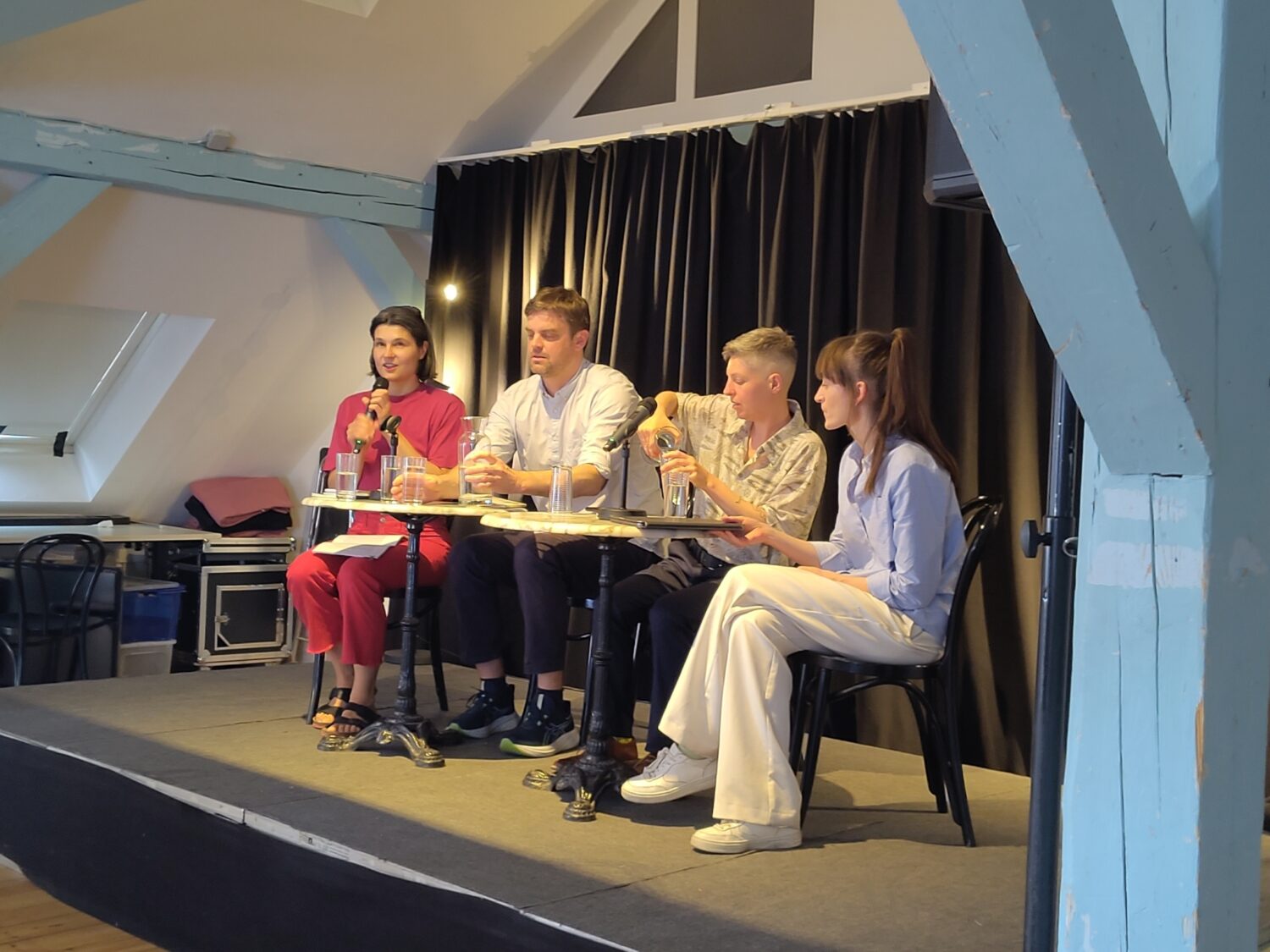
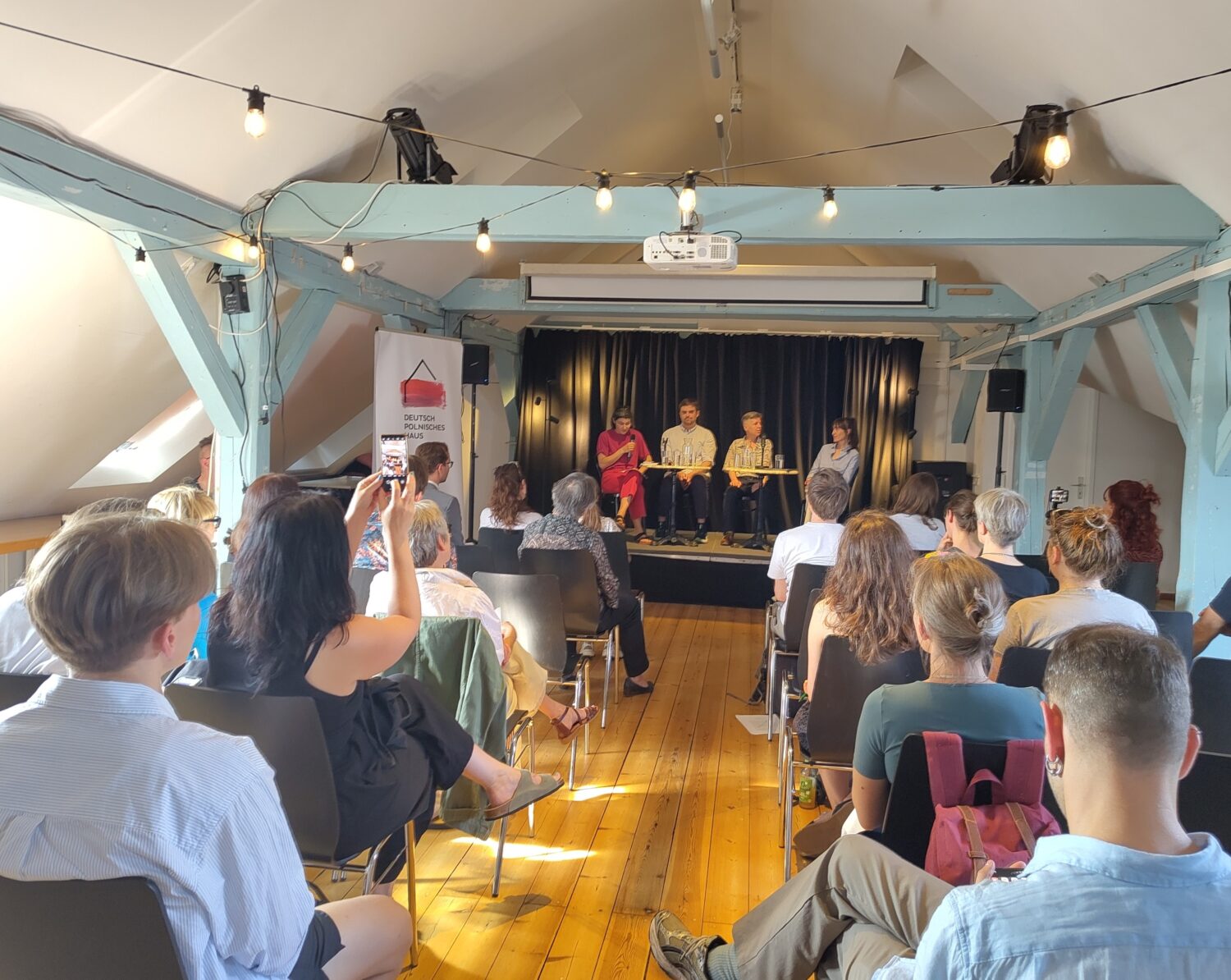
How does it feel to leave the "land of the victims" and migrate to the "land of the perpetrators"? How does the relationship to one's own language change? What does it mean to remember German history of violence in Poland when you live in Germany? The discussion, reading and screening with the writers Matthias Nawrat and ariel rosé and the director Nicole Humiński are dedicated to these questions. The colloquial expression "dawać w kość" - literally "to put in the bones" - is a strong metaphor and an emotional aggregate that captures the memory of German history of violence and a migration experience and allows us to think and feel further.
The event is a co-operation project between the German-Polish House and the FHXB Friedrichshain - Kreuzberg Museum.
The event will be held mainly in German with Polish and English sections.
Registration is not necessary.


Matthias Nawrat was born in 1979 in Opole/Poland. He published five novels, the most recent one in 2021 was “Reise nach Maine” (Travelling to Maine), ant the collection of poems “Gebete für meine Vorfahren” (Prayers for my ancestors). His work was awarded with the European Union Prize for Literature 2020 (for The Sad Guest) and the Fontane Literature Prize 2023, amongst other awards. In 2024 he published the collection of essays and travel journals “Über allem ein weiter Himmel – Nachrichten aus Europa” (Above everything, a vast sky – News from Europe). Matthias Nawrat lives in Berlin.

© Photo: Lorena Simmel
ariel rosé – Polish-Norwegian transgender poet, essayist, illustrator, author of the books morze nocą jest mięśniem serca (PIW, 2022) / море вночі стає м’язом серця (Duh i Litera 2024, trans. Natalia Belchenko) and Północ Przypowieści (North: Parables), Znak, 2019, nominated for the Polish-German Josepha Award. The poems in German translation by Marlena Breuer were published in Sinn und Form and by Box of Rain Press. He has published poems and essays in many languages, in journals such as: Asymptote Journal, Arrowsmith Journal, River Heron Review in the States, and in Europe in: Eurozine, Esprit, Sinn und Form, Irodalmi Szemle, Revista Sibila, Vinduet, Samtiden. He is a member of PEN Berlin and Circolo Scandinavo in Rome, Italy. Twice a year he invites poets from underrepresented countries to Oslo, leads a conversation, and translates poems into Norwegian together with Aina Villanger. ariel has two books forthcoming: Ukraine–A Polyphony and Ways of Swimming. rosé is also co-editor of Both Sides Face East/Durable Words (Academic Studies Press, 2025).

© Photo: Dirk Skiba
Nicole Humiński is a German-Polish director studying at the University of Television and Film Munich. Her films have received international recognition, including Coins, which won the German Camera Award in the young talent category. Alongside her work as a director, she is actively engaged in remembrance culture. As the head of the ECHOS initiative, which was created within the framework of the "Fates from Poland 1939-1945" project by the German Institute of Polish Affairs and funded by the EVZ Foundation and the German Federal Ministry of Finance, she works on addressing German-Polish history. For her work Ich weiche ja in meinem Leben jeglichem Zwang aus (Throughout My Life, I Avoid Any Form of Coercion) created during this project, she is nominated for the German Camera Award in the young talent category for editing. Her latest short film But I Never Asked is based on research from the ECHOS project and is currently in final post-production. Her artistic works have been presented at renowned institutions, including the Pinakothek der Moderne Munich, the Museum für Kunst & Gewerbe Hamburg, and neimënster Luxembourg.

© Photo: Nikolai Huber
Jadwiga Kamola, born in 1983 in Warsaw, is a historian, curator, and author, specializing in the history of ideas. Her studies traverse the intersections of art, fascism, and modernism, with a keen interest in post-migration memory. Jadwiga Kamola edited and published pivotal works such as »Kunst, Kitsch, Faschismus, Kolonialismus. Leni Riefenstahls fotografisches Spätwerk im Museum« (2021; tr: Art, Kitsch, Fascism, Colonialism: Leni Riefenstahl’s Late Photographic Work in the Museum) and »Artist Complex. Images of Artists in the Twentieth Century-Photography« (2021). She completed her PhD in Global Art History at the Cluster Asia and Europe in a Global Context Heidelberg in 2015, leading to roles as Assistant Curator at the Staatliche Museen zu Berlin. In 2019, she transitioned to digital formats, becoming a Curator at the Bildungsstätte Anne Frank in Frankfurt/Main. Jadwiga Kamola continued her curatorial work at the Museum für Kunst und Technik des 19. Jahrhunderts in Baden-Baden in 2022, and in 2023 - 2025 at the Munich Documentation Center for the History of National Socialism.

© Photo: Private